Is an EV Charger Worth It for a Holiday Let? The Real Numbers for 2026
The short answer
For most holiday lets with off-street parking, yes, but mainly because of the bookings it can win rather than the margin on the electricity. Selling charging to guests earns a modest return on its own. At £160 a night, about seven extra booked nights brings in more than the £999 net cost of a charger, although your share after cleaning and commission will be lower.
What the booking data says
The best recent figure comes from Awaze, the group behind several large UK holiday rental brands. In 2025, it says, holiday homes offering an EV charger had 16% more bookings and 39% more revenue than those without.
Treat that as a useful signal, not a promise. Awaze shared it alongside a partnership with a charger maker, and it hasn't published a method. Homes with chargers may also be larger or better placed to begin with, so the charger won't be the whole reason for the gap.
The wider picture supports the direction, even if the size of the effect is uncertain:
- Electric cars are a growing share of guests. Zapmap counts more than 2.33 million fully electric cars in the UK at the end of October 2026. That's about 1 in 15 cars on the road, but new ones are arriving faster: SMMT's preliminary figures put electric cars at 26.2% of new registrations for the first nine months of 2026.
- Few lets offer a charger. Monta's analysis of booking platform data found only 2.46% of UK holiday lets had one on site. It's an older figure and will have risen, but the amenity is still far from standard.
- Guests can search for it. Airbnb lets guests filter by EV charger, so a listing without one can drop out of those searches altogether.
How much do you earn from the electricity?
Here's one typical top-up of 35kWh, with the guest paying 40p/kWh, which sits in the middle of a fair 35–45p range.
| Standard tariff (about 26p/kWh) | Overnight EV tariff (about 8p/kWh) | |
|---|---|---|
| Guest pays | £14.00 | £14.00 |
| Your electricity cost | £9.10 | £2.80 |
| Your margin per top-up | £4.90 | £11.20 |
The margin adds up slowly. These are illustrative figures against the £999 net cost, before any payment fees:
| Top-ups a year | Margin on standard tariff | Payback | Margin on overnight tariff | Payback |
|---|---|---|---|---|
| 20 | £98 | about 10 years | £224 | about 4.5 years |
| 40 | £196 | about 5 years | £448 | about 2.2 years |
Two things stand out. Your tariff matters more than almost anything else, because the overnight rate more than doubles the margin. And if charging income were the only benefit, a quiet let on a standard tariff would be a slow payback.
Guests still get a good deal. Zapmap's October 2026 price index puts average pay-as-you-go public charging at 54p/kWh on slower chargers and 82p/kWh on rapid and ultra-rapid ones, so 40p/kWh beats both.
How many extra bookings pay for a charger?
This is where the sums change. Using £160 a night as an example:
| Booked nights needed to cover £999 | |
|---|---|
| Counting the full nightly rate (£160) | 7 nights |
| Keeping 60% after cleaning, commission and changeover costs (£96) | 11 nights |
If your let is booked for 150 nights a year, seven extra nights is a lift of under 5%, and eleven is a little over 7%. Both are less than half of Awaze's headline 16%. So you don't need the headline figure to be fully true for the charger to pay for itself within a year or two. Put your own nightly rate and costs into the sums, because a smaller or cheaper let needs more nights.
Charging margin then comes on top. There may be a smaller benefit too: fewer guests asking where to charge, and better reviews from EV drivers who didn't have to hunt for a public charger on day one of their holiday.
What does a charger cost after the grant?
The Workplace Charging Scheme, run by OZEV, is open to small accommodation businesses, including holiday lets. There's no minimum number of parking spaces, and guests may use the charger.
- It covers up to 75% of purchase and installation costs, capped at £500 per socket
- You need to own the property or have your landlord's consent
- The off-street parking must be linked to the property
- The scheme closes on 31 March 2027
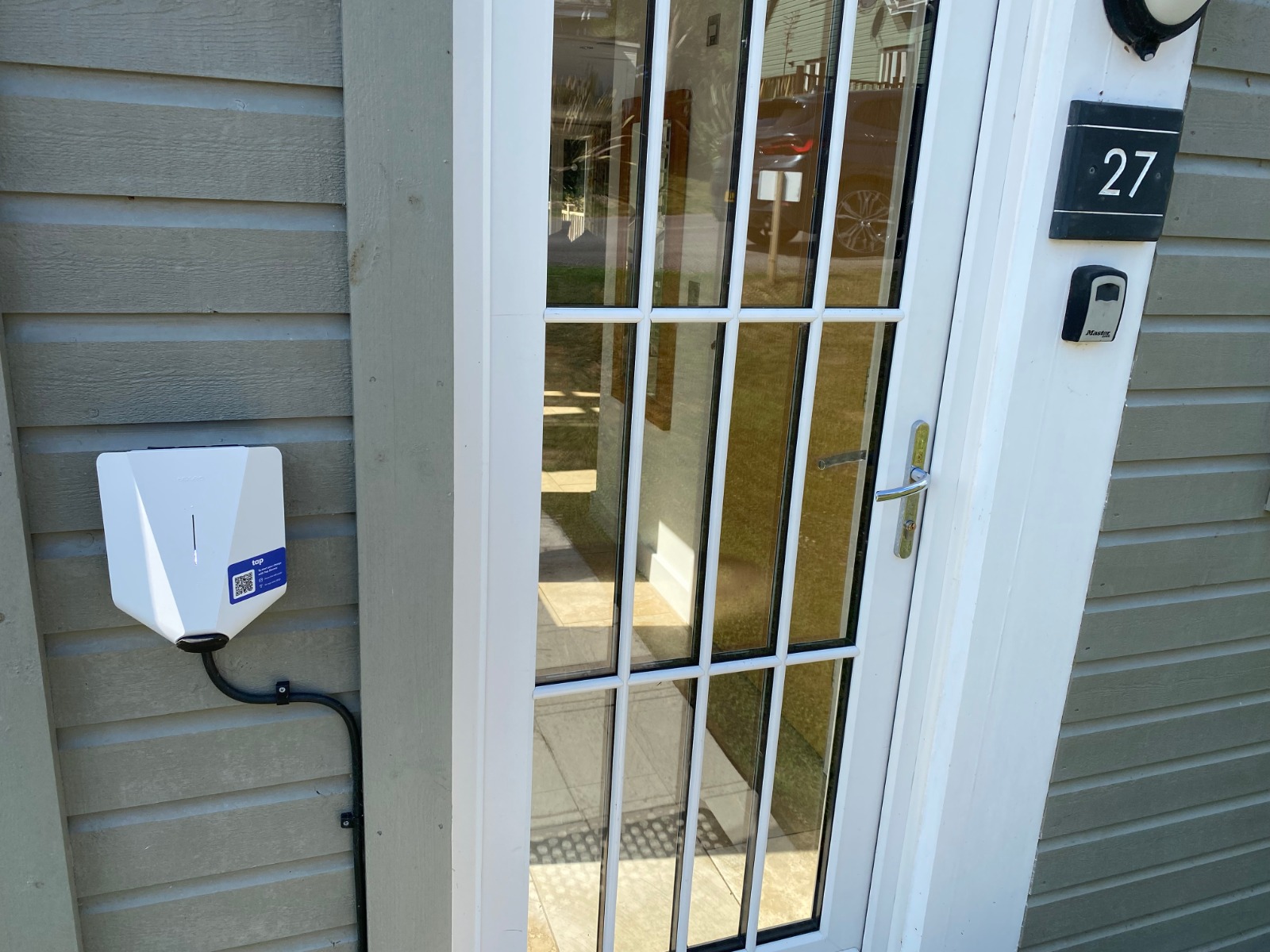
You apply for the voucher yourself on GOV.UK. On Manta Power's holiday let offer, that takes £1,499 down to £999 fully installed.
The deadline matters for the payback. Without the grant, the same charger costs £500 more, and every sum above takes longer. Easter falls on 28 March 2027, so a winter installation gets you ready for the season and inside the grant window.
Is EV charger installation in Cornwall or Devon worth it for your let?
It's most likely to pay off if:
- Guests stay two nights or more and can leave the car plugged in overnight
- Your let is rural or coastal, with public chargers a drive away
- You have a good nightly rate, so a few extra nights cover the cost quickly
- You can move to an overnight EV tariff, if it suits the property
- You'd like to stand out against nearby lets that don't have a charger
It may not be worth it if:
- You have no off-street parking linked to the property, as the grant requires it
- The property has low occupancy, with few nights to gain
- The install is unusually difficult, such as a very long cable run or a supply that needs upgrading, which can add cost
- You plan to sell or stop letting in the next couple of years
Get the property checked before you commit. Then speak to two people: your insurer, to confirm you're covered, and your accountant. The furnished holiday lettings tax regime ended in April 2025, so older advice about how to treat the cost may no longer apply.
FAQ
Is an EV charger worth it for a holiday let? For most lets with off-street parking, yes. Awaze reports 16% more bookings and 39% more revenue for its homes with chargers in 2025, although it hasn't published its method. At £160 a night, a small lift in bookings can cover the £999 net cost.
How long does a holiday let EV charger take to pay for itself? On charging margin alone, about 2–10 years, depending on your tariff and how often guests charge. With extra bookings included, it can be much quicker. About 7–11 extra nights covers the cost at £160 a night.
Can I make money from guests charging their cars? Yes, but it's modest. At 40p/kWh, you make about £4.90 per 35kWh top-up on a standard tariff and about £11.20 on an overnight EV tariff, before any payment fees.
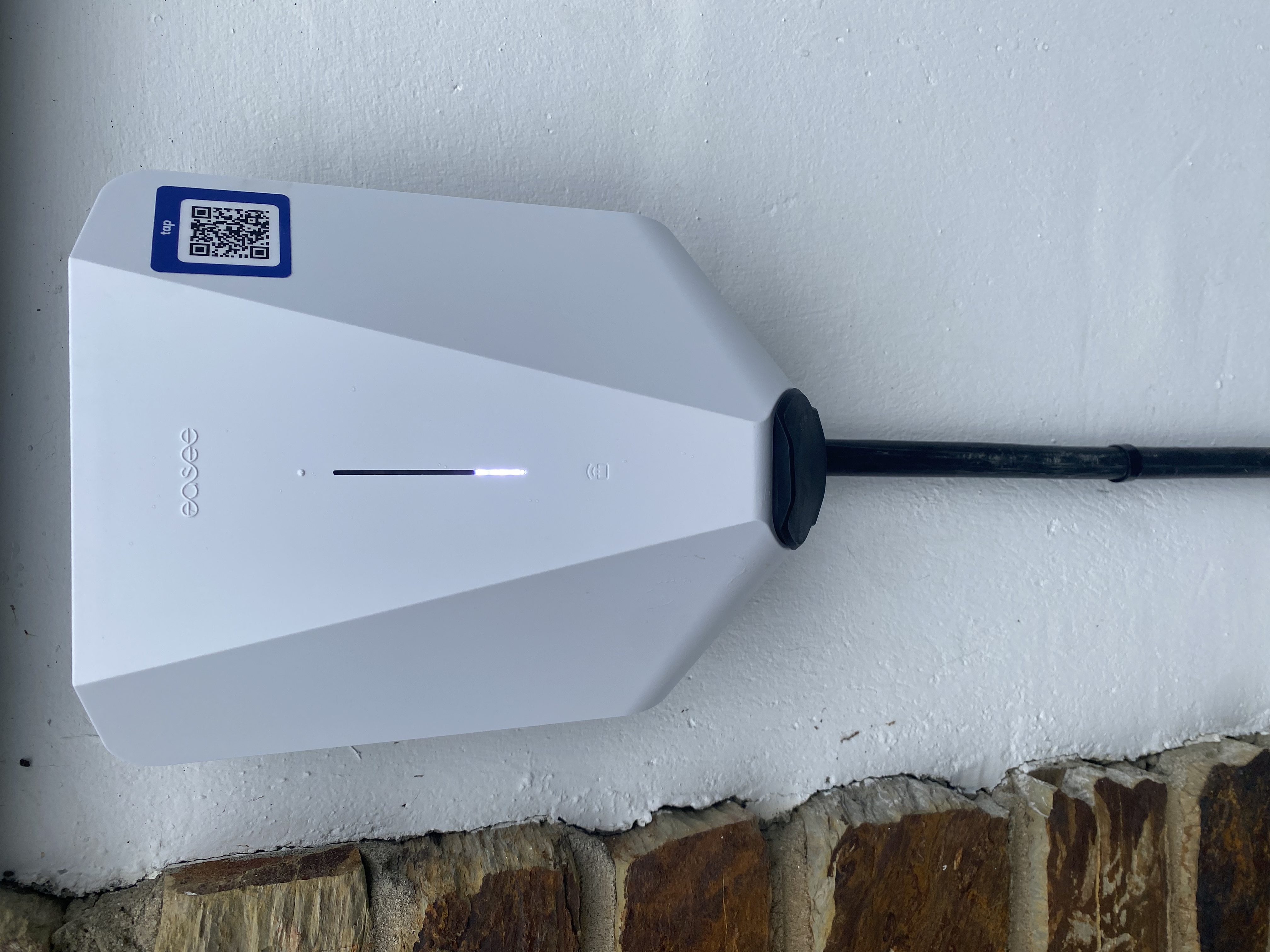
Should I offer EV charging free to guests? Usually not. A smart charger meters each session, and the guest pays through an app or QR code, so you recover your electricity cost and earn a small margin.
Will a charger still be worth it after the grant ends? It can be, but the sums get harder. Without the £500 grant, the charger costs £1,499 rather than £999. The Workplace Charging Scheme closes on 31 March 2027, so it's worth deciding this winter.
Wondering if a charger would pay off at your holiday let? Manta Power arranges smart, guest-pay chargers for holiday let owners across Cornwall, Devon and the South West, fitted by our local installation partners. See the holiday let offer, work out your earnings with our calculator, or call 07441 353701.