
Village Halls Community Charging
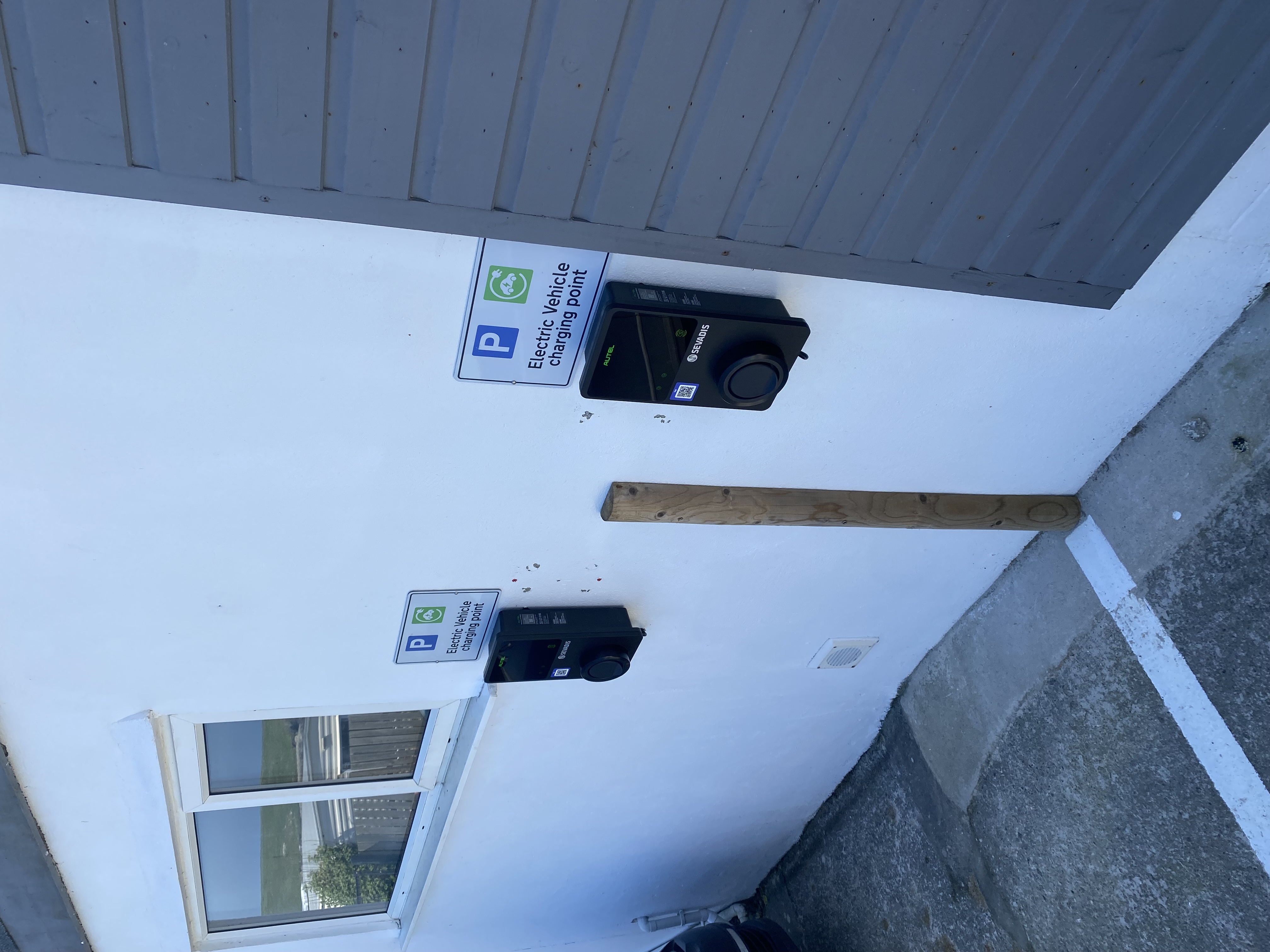
Village Halls and Community EV Charging: Cornwall's Answer to Rural Charging Deserts
The most practical solution lies with Cornwall's network of community buildings—especially village halls.
The Rural Charging Problem
Cornwall Council secured £5.5 million in government funding to deploy up to 2,000 new EV charging points, with installation beginning in 2025, focusing on lower-powered, cost-effective residential charging solutions, Electrive. This massive investment acknowledges a critical gap in Cornwall's charging infrastructure.
Rural areas like Cornwall are being earmarked for community-based slow chargers as part of the UK's 2025 expansion plan. The completedesignlab, recognizing that traditional rapid charging hubs along major routes don't solve the problem for residents in villages and rural communities.
Cornwall's geography presents specific challenges:
- Dispersed population - 573,000 residents across 3,563 square kilometers
- Limited commercial viability - Many communities are too small for commercial charging operators
- Tourism pressure - Seasonal demand spikes that don't support year-round commercial investment
- Grid constraints - Cornwall's position at the end of the UK's transmission network
- Housing characteristics - Many properties without off-street parking
For the 30-40% of Cornwall residents who rely on on-street parking or live in properties without dedicated parking, home charging isn't an option. Without local community charging, these residents simply cannot transition to electric vehicles, regardless of their preferences.
Why Village Halls Are the Perfect Solution
Kent County Council's successful program demonstrates that village hall car parks and community hubs offer the best locations for charge points, particularly where multiple chargers can be installed and there's demonstrated local need (Kentsmartertravel).
This success in Kent provides a proven model for Cornwall communities to consider replicating. Kent prioritized locations where private sector investment was unlikely—mirroring the situation in many Cornwall villages.
Village Hall Advantages:
- Existing Infrastructure Electricity is taken from the existing supply to the building, though consumption will rise, which is why charging end users per kWh is important.
Unlike public on-street charging that requires new grid connections and civil works, village halls already have:
- Electrical supply and consumer units
- Car parking facilities
- Existing building insurance
- Management structures (hall committees)
- Community ownership or long-term leases
This reduces installation complexity and cost versus new sites.
- Public Access with Management Village hall car parks are typically available when the hall isn't in use, which often means:
- Evening availability - Perfect for overnight residential charging (7pm-7am)
- Weekend access - When many residents have time to charge
- Daytime flexibility - Between bookings, car parks sit empty
- Event coordination - Charging can be managed around hall events.
Unlike purely public sites, village hall committees can set policies, address community needs, and adapt access locally.
- Community Support and Ownership Parish councils demonstrate commitment to reducing community carbon footprint while providing residents with essential infrastructure, particularly where off-road parking is at a premium. Mellor Parish Council.
Village hall charging installations send powerful messages:
- Environmental leadership - Community taking climate action
- Resident support - Solving practical problems for locals
- Forward-thinking - Positioning the community for future transport needs
- Economic investment - Improving local infrastructure
Communities better support and maintain facilities they view as their own, unlike corporate sites.
- Revenue Potential Properly managed systems generate income through usage fees while covering electricity costs. This creates a sustainable funding stream for:
- Hall improvements and maintenance
- Community programs and activities
- Further sustainability investments
- Reducing hall hire rates for local groups
Some village halls report annual net income of £1,000-3,000 from well-utilized chargers—significant funds for community organizations operating on tight budgets.
- Strategic Location Village halls are typically centrally located within communities:
- Easy walking distance (within 5-10 minutes) for most residents
- Known locations that don't require wayfinding
- Safe, well-lit environments
- Often near other community amenities (shops, schools, pubs)
Combined, these features make village halls ideal for "destination charging"—residents can walk to the hall, plug in their vehicle, and return hours later to collect a fully charged car.
Real-World Success Stories
Mellor Parish Council, Lancashire
Mellor Parish Council collaborated with Charge My Street to install chargepoints at the village hall at no cost to the council, funded through community share offers and Innovate UK grants.
Key outcomes:
- Zero capital cost - Funding covered the entire installation
- Community benefit - Free charging for key workers during the pandemic
- Environmental leadership - First parish council in their area to implement community charging
- Resident solution - Serves residents with limited off-road parking.
This project showed that even small parish councils with limited budgets can successfully implement community charging by adopting a creative funding approach.
Thornham Village Hall, Norfolk
Thornham Village Hall in Norfolk installed EV charging after receiving consultancy support, taking advantage of the Norfolk Rural Electric Vehicle Charge Point Pilot Scheme Groundworks.
At Thornham Village Hall, the existing solar panels and battery storage made EV charging a logical next step in their sustainability journey. This example illustrates how community buildings can integrate renewable energy systems:
- Solar panels generate daytime electricity.
- Battery storage captures excess generation.
- EV chargers use stored solar energy.
- Grid import minimized, reducing costs.
- Complete renewable energy ecosystem at the community level.
Kent County Council Program
Kent's village hall charging program has installed chargers at 25 locations, with 8 more in progress. Their experience provides valuable insights:
Application Process:
- Over 100 expressions of interest from parish councils and village halls
- Competitive scoring system prioritizing demonstrated need.
- Focus on locations serving residents without off-street parking.
- Preference for sites where multiple chargers could be installed
Installation Approach:
- Initial installations in council car parks (lower risk, simpler legal arrangements)
- Phased expansion to on-street charging as learnings developed
- Community consultation throughout
- Flexibility in design to accommodate local preferences
Outcomes:
- High utilization in locations with identified resident needs
- Revenue generation supporting community buildings
- Model refined and ready for expansion.
- Strong community support and engagement
Available Funding and Support
The Workplace Charging Scheme for Charities
The Workplace Charging Scheme is now available to charities, including village halls, covering up to 75% of installation costs in Northantsacre.
Grant Details:
- Amount: Up to £350 per charger socket
- Coverage: 75% of purchase and installation costs (whichever is lower)
- Eligibility: Charitable organizations, including village halls
- Process: Voucher-based system, 180-day validity
Key Eligibility Requirements:
- Freehold or leasehold ownership of the car park
- Dedicated off-street parking (not on-road)
- Publicly accessible during specified hours
- Professional installation by an OZEV-approved contractor
Example Cost Calculation:
7kW smart charger and installation: £1,400 Workplace Charging Scheme grant (75%): -£1,050 Net cost to village hall: £350
With just one charger, the out-of-pocket cost is exceptionally low—often less than a village hall spends on maintenance in a single month.
Cornwall Council LEVI Funding
Cornwall Council is specifically seeking input from residents, community groups, and parish councils to identify priority locations for new charging infrastructure.
The council's £5.5 million LEVI funding specifically targets areas where private sector investment is unlikely—exactly where most village halls are located. This presents opportunities for:
- Collaborative installations - Council and community organizations partnering
- Infrastructure support - Council managing grid connections and civil works
- Operational support - Shared management systems across multiple sites
- Bulk procurement - Reduced equipment costs through council-led purchasing
Now is the time for communities to come forward and ensure their villages are prioritized. Actively participate in Cornwall Council's consultation process—share your needs, propose your hall, and help shape the EV future for rural Cornwall.
Additional Funding Sources:
Local Authority Grants Many Cornwall parish and town councils have:
- Climate action funds
- Community infrastructure budgets
- Capital improvement allocations
- Green energy transition programs
For additional support, village halls should approach their local authorities to discuss a cost-sharing arrangement as part of the funding mix.
Community Share Offers: Following the Mellor Parish Council model, communities can raise funds through share offers in which residents invest in local charging infrastructure. This approach:
- Spreads costs across community members.
- Creates ownership and engagement
- May qualify for tax relief schemes
- Builds support for the project
Renewable Energy Partnerships Organizations like Community Energy England and local renewable energy cooperatives sometimes fund or co-fund EV charging as part of broader community energy projects.
Technical and Practical Considerations
Power Capacity Assessment
Your hall's electrical supply needs an assessment before installation. Sites may need load balancers to support additional electrical load without costly upgrades, Mer UK.
Typical Village Hall Electrical Supply: Most village halls have single-phase supplies of 60-100 amps. This provides:
- Existing hall load: 40-60 amps (lighting, heating, kitchen)
- Available capacity: 20-40 amps
- EV charger requirement: 32 amps for a 7kW charger
In many cases, a single charger can accommodate capacity without upgrades. For multiple chargers, load management systems enable:
- Dynamic power sharing between chargers
- Reduced charging speed when the hall is in use
- Priority scheduling for overnight charging
- Maximum utilization of available capacity
Electrical Upgrade Considerations: If upgrades are needed, options include:
- Three-phase supply: supports multiple high-power chargers.
- Supply capacity increase - More amps from the grid (subject to local network capacity)
- Load management - Sophisticated systems maximizing existing capacity
- Solar and battery - Supplementing grid supply with renewables
Cornwall Council's LEVI funding may cover grid connection upgrades for community sites, making this an excellent time to explore options.
Charger Type Selection
Consider whether rapid, fast, or slow charging suits your situation. Groundworks.
For village hall overnight charging:
7kW "Fast" Chargers (Recommended)
- Charges a typical EV in 6-8 hours (perfect for overnight)
- Moderate electrical load
- Lower equipment costs (£1,000-1,500 installed)
- Sufficient for resident needs
- Most cost-effective for grant funding
3.6kW "Slow" Chargers
- Charges a typical EV in 10-12 hours (still suitable overnight)
- Minimal electrical load (equivalent to a kettle)
- Lower equipment costs (£800-1,200 installed)
- Works with most existing supplies
- Better for a very constrained electrical capacity
22kW "Fast" Chargers
- Charges a typical EV in 3-4 hours
- High electrical load (requires three-phase supply)
- Higher equipment costs (£2,000-3,000 installed)
- Generally unnecessary for overnight community charging
- Consider only if a three-phase supply is already in place.
For most Cornwall village halls, 7kW chargers represent the optimal balance of charging speed, cost, and electrical requirements.
Management Systems
Modern charge points require the end user to be charged per kWh, with revenue share calculations potentially requiring evidence of electricity use, Kentsmartertravel.
Management System Requirements:
- User authentication - RFID cards, apps, or contactless payment
- Usage tracking - kWh consumed per session
- Financial reporting - Revenue and electricity cost tracking
- Access control - Restrict usage to authorized community members or allow public access
- Remote monitoring - Identify and resolve issues without site visits.
Management Options:
Option 1: RFID Card System. Village hall issues cards to community members:
- One-time setup fee: £50-100
- Card cost: £2-5 per card
- Monthly software fee: £10-15
- Simple for users (tap card to start)
- Hall controls who has access
Option 2: App-Based System Users download the app and create accounts:
- Integration fee: £100-200
- Monthly software fee: £15-25
- Automated payment processing
- Self-service for users
- Detailed usage data
Option 3: Contactless Payment Users pay directly with debit/credit cards:
- Equipment premium: £200-300 per charger
- Transaction fees: 1.5-2% of revenue
- No pre-registration required
- Attracts passing trade (tourists, visitors)
- Most user-friendly
Hybrid Approach (Recommended for Cornwall):
- RFID cards for local residents (discounted rates)
- Contactless payment for visitors/tourists (standard rates)
- Supports both community members and the tourism economy
Insurance and Legal Requirements
Insurance Considerations:
Village halls must notify their insurers about EV charger installation. Key points:
- Professionally installed chargers rarely increase premiums.
- Some insurers offer reduced rates for renewable energy installations.
- Additional liability coverage may be required for public charging.
- Equipment value should be added to building/contents insurance.
Typical insurance questions:
- Power rating of chargers?
- Installed by a qualified electrician?
- Relevant certifications obtained?
- Access control measures implemented?
- Regular maintenance schedule planned?
Legal Agreements:
License agreements are required with landowners or leaseholders, and legal agreements protect both the installing authority and the community organization, Kentsmartertravel.
Required documentation:
- Land ownership verification - Freehold or lease terms allowing installations
- Parish council approval - If the council owns land
- Lease amendments - If the hall is leased, landlord consent is required.
- User terms and conditions - Clear usage rules for charger users
- Data protection compliance - GDPR for user information collected
Most grant programs provide template legal documents, reducing complexity and legal costs.
Revenue Models for Village Halls
Model 1: The Cost Recovery Charge is exactly what it costs to break even on electricity.
Example:
- Electricity cost: 24p/kWh
- Charge to users: 24p/kWh
- Purpose: Enable EV adoption without a profit motive
- Best for: Community service-focused halls
Model 2: Modest Markup Cover electricity plus a small margin for maintenance and operations.
Example:
- Electricity cost: 24p/kWh
- Charge to users: 30p/kWh
- Margin: 6p/kWh
- Annual usage: 5,000kWh
- Annual net income: £300
Model 3: Market Rate Pricing Price competitively with public chargers.
Example:
- Electricity cost: 24p/kWh
- Charge to users: 40p/kWh
- Margin: 16p/kWh
- Annual usage: 5,000kWh
- Annual net income: £800
Model 4: Tiered Pricing Different rates for community members vs. visitors.
Example:
- Residents: 28p/kWh (modest markup)
- Visitors: 45p/kWh (market rate)
- Balances community support with tourism revenue
- Requires a management system that distinguishes user types
Realistic Revenue Projections:
Small Village (pop. 500):
- Estimated EV owners: 12-15 (by 2026)
- Regular users: 5-8 residents without home charging
- Average usage per user: 40kWh/month
- Total monthly usage: 240kWh
- Monthly revenue (at 30p/kWh): £72
- Annual revenue: £864
- Less electricity costs: -£576
- Net annual income: £288
Medium Village (pop. 2,000):
- Estimated EV owners: 50-60 (by 2026)
- Regular users: 15-20 residents
- Average usage per user: 40kWh/month
- Total monthly usage: 680kWh
- Monthly revenue (at 30p/kWh): £204
- Annual revenue: £2,448
- Less electricity costs: -£1,632
- Net annual income: £816
Tourist-Heavy Village:
- Add 30% usage from visitors in peak season.
- Higher pricing for visitors (40-45p/kWh)
- Additional annual net income: £300-500
These projections are conservative and assume moderate adoption. As EV percentages grow toward 27% by 2030, usage will increase substantially.
Implementation Roadmap
Phase 1: Assessment and Planning (Weeks 1-4)
Week 1: Initial Assessment
- Committee discussion and decision
- Basic electrical survey (can often be done by a committee member with electrical knowledge)
- Site suitability evaluation (car park size, lighting, safety)
- Preliminary community consultation
Week 2: Detailed Survey
- Professional electrical survey by OZEV-approved installer
- Accurate cost estimate
- Equipment specifications
- Installation timeline
Week 3: Community Engagement
- Village meeting or survey about EV charging
- Gauge community interest and support
- Identify potential users
- Discuss pricing and access policies.
Week 4: Funding Applications
- Complete Workplace Charging Scheme application
- Explore Cornwall Council LEVI funding opportunities.
- Approach the parish council for co-funding
- Prepare a business case for committee approval.
Phase 2: Approval and Installation (Weeks 5-10)
Weeks 5-7: Grant and Permissions
- Await grant voucher (typically 5-10 working days)
- Secure any required planning permissions (usually not needed)
- Finalize installer contract
- Update insurance
Weeks 8-9: Installation
- Typical installation: 1-2 days
- Electrical work and charger mounting
- Configuration and testing
- Commissioning
Week 10: Launch
- User training session for the community
- Create instruction materials
- Issue RFID cards (if using)
- Soft launch with initial users
Phase 3: Operation and Optimization (Ongoing)
Month 1: Monitoring
- Track usage patterns
- Gather user feedback
- Troubleshoot any issues
- Adjust policies as needed.
Months 2-6: Optimization
- Analyze usage data
- Refine pricing if needed.
- Marketing to increase utilization
- Consider expansion (additional chargers)
Ongoing: Management
- Monthly financial reporting
- Routine maintenance checks
- User support
- Annual electrical inspection
Marketing and Community Engagement
Launching Your Charging Service:
Community Communication:
- Article in village newsletter
- Parish council meeting announcement
- Village website and social media
- Posters in the hall and local shops
- Direct communication to known EV owners
User Registration:
- Simple sign-up process
- Clear terms and conditions
- Easy payment setup
- Training materials or videos
Signage:
- Clear directional signage to the car park
- Charger location marking
- Usage instructions
- Emergency contact information
- Pricing display (if applicable)
Digital Presence:
- Add to Zap-Map (UK's leading charge point map)
- PlugShare listing
- Google Maps update
- Cornwall Council charging map
- Village hall website
Attracting Users:
For Residents:
- Competitive pricing vs. public chargers
- Convenient location
- Community ownership
- Supporting local infrastructure
- Reliable availability
For Visitors:
- List on tourism websites
- "EV-friendly village" marketing
- Combine with other attractions.
- Payment ease (contactless)
- Local amenity access while charging
Common Challenges and Solutions
Challenge 1: Low Initial Utilization Solution: EV adoption is growing rapidly. Low initial use is normal and will increase over time. Consider this infrastructure investment for future needs, not just current demand. Marketing to EV owners in surrounding villages can increase utilization.
Challenge 2: Conflicts Over Parking Spaces Solution: Clear signage indicating "EV Charging Only While Charging." Consider time limits (e.g., maximum 12 hours) to prevent space hogging. ICE vehicle (petrol/diesel) parking in EV spaces can be addressed through community education and considerate use policies.
Challenge 3: Equipment Failures Solution: Choose reliable equipment with strong warranties (3+ years). Work with local installers who can respond quickly. Most smart chargers alert operators to issues before users experience problems.
Challenge 4: Payment Collection Solution: Automated payment systems (RFID cards, apps, contactless) eliminate manual collection. Monthly billing for registered users is manageable. Avoid cash-based systems.
Challenge 5: Electricity Bill Management Solution: Separate metering for chargers (if possible) or smart chargers with precise tracking to enable accurate cost allocation. Modern management systems generate reports automatically.
The Strategic Importance of Cornwall
By 2030, Cornwall is estimated to need between 3,010 and 4,510 public chargepoints, with the private sector expected to deliver a significant proportion of these for Cornwall Council.
However, private operators focus on high-traffic locations with strong commercial viability:
- A30 corridor service stations
- Major towns (Truro, Newquay, Falmouth)
- Tourist attractions with high throughput
- Retail parks and shopping centers
This leaves rural communities dependent on the public sector and community-led initiatives. Village halls aren't just a nice-to-have—they're essential infrastructure for enabling Cornwall's EV transition in rural areas.
Without community charging, rural Cornwall residents face:
- Inability to adopt EVs without home charging
- Dependence on distant public chargers
- Range anxiety is limiting local journeys.
- Economic disadvantage compared to urban residents
Village halls bridge this gap, ensuring equitable access to EV adoption across Cornwall's diverse geography.
Environmental and Community Benefits
Carbon Reduction: Every EV charging session at community facilities represents:
- Eliminated petrol/diesel consumption
- Reduced local air pollution
- Support for Cornwall's net-zero targets
- Demonstration of climate action
If a village hall enables just 5 residents to transition to EVs, that represents:
- Approximately 15 tonnes of CO₂ reduction annually
- £7,500 saved on fuel costs by residents
- Improved air quality in the village center
- Reduced fossil fuel dependence
Community Cohesion: Village halls with charging facilities become:
- Meeting points for EV-owning residents
- Focal points for sustainability discussions
- Examples of community problem-solving
- Points of pride for forward-thinking villages
Economic Development: EV charging attracts:
- Visitors who might not otherwise stop
- Spending at local businesses while charging
- Positive perception of the area
- Long-term property value appreciation
A 45-minute charge session often results in visitors:
- Having coffee or meals at local cafes
- Shopping at village stores
- Exploring local attractions
- Staying longer in the community
The Manta Power Approach to Community Installations
At Manta Power, we understand that community buildings have different needs than commercial properties:
Community-Specific Expertise:
- Budget sensitivity - Maximizing grant funding to minimize out-of-pocket costs
- Volunteer committees - Clear communication and simple decision-making processes
- Community engagement - Support for public meetings and consultations
- Long-term relationships - We're local, so we're invested in your community's success
Technical Excellence:
- Cornwall grid knowledge - Understanding local electrical infrastructure constraints
- Rural installation experience - Working with older buildings and limited capacity
- Grant expertise - Complete support through application processes
- Quality equipment - Reliable, user-friendly chargers with strong warranties
Ongoing Support:
- Maintenance programs - Scheduled inspections and preventive maintenance
- 24/7 user support - Help for residents and visitors
- System optimization - Adjustments based on usage patterns
- Expansion planning - Growing with your community's needs
We've supported multiple community organizations through the charging installation process and understand the unique dynamics of village halls, parish councils, and community committees.
Success Factors for Village Hall Charging
Based on successful installations across the UK, these factors predict project success:
✓ Strong Committee Support Unanimous or near-unanimous committee backing ensures smooth implementation and ongoing management.
✓ Identified User Base Knowing 5-10 residents who will definitely use the charger provides confidence in utilization.
✓ Strategic Location: Central village location within walking distance for the majority of residents.
✓ Adequate Electrical Capacity: Existing supply sufficient or upgrade costs covered by grants/partners.
✓ Clear Policies Usage rules, pricing, and access control are decided before launch.
✓ Community Communication: Regular updates and engagement throughout the process.
✓ Financial Planning: Realistic projections and budget allocation for ongoing costs.
✓ Partnership Approach Collaboration with the parish council, Cornwall Council, and local businesses.
The Time to Act
Cornwall Council's £5.5 million LEVI funding represents a once-in-a-generation opportunity for community charging infrastructure. The council is actively seeking community input on charging locations—village halls should engage now to ensure their communities are prioritized.
Key timing considerations:
- Grant funding availability - Current schemes fully funded for 2025-26
- Installer capacity - Demand will increase as Cornwall's 2,000-charger rollout progresses
- Community needs - EV adoption is accelerating faster than infrastructure deployment.
- Competitive advantage - First-mover communities capture benefits
Villages that act now will be serving their communities while others are still discussing options.
Next Steps for Cornwall Village Halls
- Committee Discussion - Add EV charging to next agenda
- Initial Assessment - Site suitability and preliminary costs
- Community Consultation - Gauge interest and gather input
- Professional Survey - Detailed electrical and site assessment
- Grant Applications - Workplace Charging Scheme and Cornwall Council engagement
- Installation - Work with an experienced local installer
- Launch - Community celebration and user onboarding
Village halls are uniquely positioned to be part of Cornwall's EV infrastructure solution. With the right support, funding, and technical expertise, your community can lead the charge toward sustainable transport while generating revenue and demonstrating environmental leadership.
Contact Manta Power to discuss how EV charging could work for your Cornwall community building. We'll provide a free consultation, site assessment, and guidance through the entire grant and installation process.
📞 Call us or visit www.mantapower.co.uk
Together, we can ensure every Cornwall community has access to the charging infrastructure needed for the electric future.