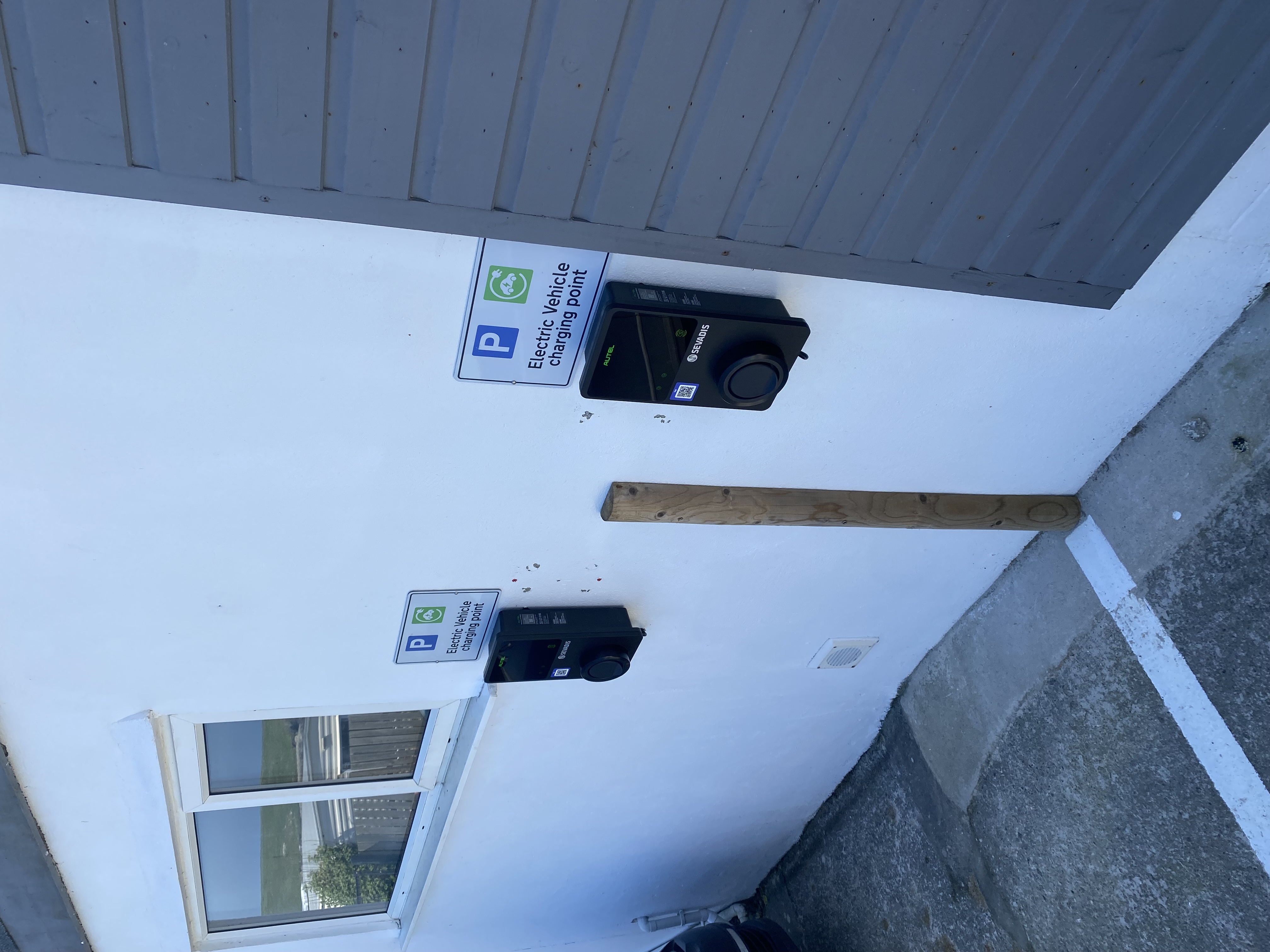
EV Charger Installation in Cornwall: Costs, Grants and What to Expect (2026)

The short answer
A standard 7kW home EV charger installation in Cornwall usually costs around £900 to £1,500 fitted, and most installs take half a day. Most driveway chargers in England don't need planning permission. The government grants are now aimed at renters, flat owners, landlords and businesses, including holiday lets, rather than people who own a house.
What does EV charger installation in Cornwall cost?
There is no official price list, but UK price guides broadly agree. For example, Octopus Energy, puts a home charger at £700 to £1,200 fully installed and says most straightforward jobs land between £800 and £1,000. The price depends mainly on the charger you choose and how far the cable has to run from your fuse board to the parking space.
| Item | Typical cost | When it applies |
|---|---|---|
| 7kW smart charger, standard install | £800 – £1,200 | Most homes with a driveway close to the fuse board |
| Consumer unit (fuse board) upgrade | £300 – £800 | Older boards without space or the right protection |
| Long or buried cable run | £100 – £300 extra | Parking space far from the house, or trenching needed |
| Holiday let guest-pay charger (Manta offer) | £1,499, or £999 after the £500 WCS grant | Holiday lets and other small accommodation businesses |
Why Cornish properties sometimes cost a little more
Cornwall;s housing stock creates some common extras:
- Older fuse boards in cottages and converted barns that need upgrading before a charger can be added
- Long runs from the house to a parking area across a yard or courtyard
- Granite and cob walls that take longer to drill and fix to
- Rural supplies where the installer has to check the main fuse size carefully before adding a 32A load
Which EV charger grants can you get in Cornwall?
The scheme you can use depends on who you are, not where you live.
| You are… | Scheme | What you can get |
|---|---|---|
| A renter, or you own and live in a flat | EV chargepoint grant for renters and flat owners | 75% of costs, up to £500 |
| A landlord | Separate landlord route on GOV.UK | Up to £500 per socket |
| A holiday let or small accommodation business | Workplace Charging Scheme (WCS) | 75% of costs, up to £500 per socket, up to 40 sockets |
| An owner-occupier of a house | No household grant | Not eligible |
According to GOV.UK, you can';t apply for the household grant if you own a house (unless it's been converted into flats and you live in one of them). You also need your own private off-street parking space.
For holiday let owners, the Workplace Charging Scheme is the one that matters. It's open to small accommodation businesses with up to 249 staff, and that explicitly includes holiday lets and other short-stay accommodation. Guests can use the charger and there's no minimum number of parking spaces. You need to own the property or have your landlord';s consent, and the parking must be off-street and linked to the property. The scheme closes on 31 March 2027.
Do you need planning permission for an EV charger in Cornwall?
Usually not. In England, most chargers are covered by permitted development rights. According to the Planning Portal:
- A wall-mounted charger and its casing must be no bigger than 0.2 cubic metres
- A freestanding post must be no taller than 1.6 metres within the grounds of a house or block of flats (2.7 metres elsewhere), with one post per parking space
- Neither is allowed within the grounds of a listed building or on a scheduled monument without permission
Cornwall has a lot of conservation areas and listed buildings, from St Ives and Fowey to many village centres. If your property is listed or in a conservation area, check with Cornwall Council before you install. Permitted development rights can be removed there by an Article 4 direction.
What happens on installation day?
A typical home or holiday let install follows these steps:
- Survey. The installer checks your fuse board, main fuse, earthing and the cable route, often from photos first and then in person.
- Mounting. The charger is fixed to a wall or post near the parking space.
- Cabling. A dedicated circuit is run from the consumer unit, with the right protection for an EV load.
- Testing and certification. The circuit is tested and certified to BS 7671, and the job is notified under Part P building regulations.
- Grid notification. The installer tells the local network operator. In Cornwall and Devon, that's National Grid Electricity Distribution.
- Set-up. The charger is connected to Wi-Fi or 4G and the app, so you can schedule charging and, for holiday lets, take payments from guests.
Most straightforward installs are done in three to five hours.
AC charging, plugs and what to choose
Home and holiday let chargers use AC charging. The car's onboard charger converts the AC power to DC for the battery. That's why a 7kW AC charger adds roughly 25 to 30 miles of range per hour, while public rapid chargers, which supply DC directly, are much faster. Overnight, AC charging is all most drivers need.
In the UK, almost every home and destination charger uses the Type 2 plug, which fits virtually all new EVs. Rapid chargers use CCS connectors, with CHAdeMO on some older models. A tethered (cable attached) or untethered (socket) Type 2 charger will suit almost every visitor's car.
New home and workplace chargers sold in Great Britain must be smart, so they can schedule charging and respond to off-peak tariffs. This matters for running costs:
| Electricity rate | Typical price per kWh |
|---|---|
| Overnight off-peak EV tariff | about 7–9p |
| Standard tariff | about 25–28p |
| Fair price to charge holiday let guests | 35–45p |
How to choose an EV charger installer in Cornwall
- Check they're registered electricians who can self-certify under Part P
- Ask who handles the grant. For WCS or household grants, the installer is usually the one who submits the paperwork
- Get a fixed quote after a survey rather than an estimate over the phone
- Ask about the app and payments if guests or staff will use the charger
- Choose someone local. An installer based in Cornwall can come back quickly if something needs attention, which matters in peak season
FAQ
How much does EV charger installation cost in Cornwall? Most standard 7kW home installs cost around £800 to £1,200, according to UK price guides. Fuse board upgrades or long cable runs add to that. Holiday let owners can get Manta's guest-pay charger for £999 after the WCS grant.
Can I get a grant for an EV charger at my house in Cornwall? Not if you own and live in a house. The household grant is for renters and flat owners. Holiday lets and other small accommodation businesses can use the Workplace Charging Scheme instead.
Do I need planning permission for an EV charger in Cornwall? Usually not, as long as the charger is within permitted development size limits. Listed buildings need permission, and conservation areas may have extra restrictions, so check with Cornwall Council.
How long does an EV charger installation take? Most installs take half a day. Jobs that need a fuse board upgrade or a long buried cable can take a full day.
What is AC charging? AC charging is the slower, everyday charging used by home and holiday let chargers. The car converts AC to DC itself. A 7kW AC charger is ideal for overnight or all-day charging.
Thinking about an EV charger installation in Cornwall for your holiday let? Manta Power installs smart, guest-pay chargers for holiday let owners across Cornwall, Devon and the South West. See the holiday let offer, work out your earnings with our calculator, or call 07441 353701.