
Can Holiday Let Owners Get an EV Charger Grant? The Workplace Charging Scheme Explained
The short answer
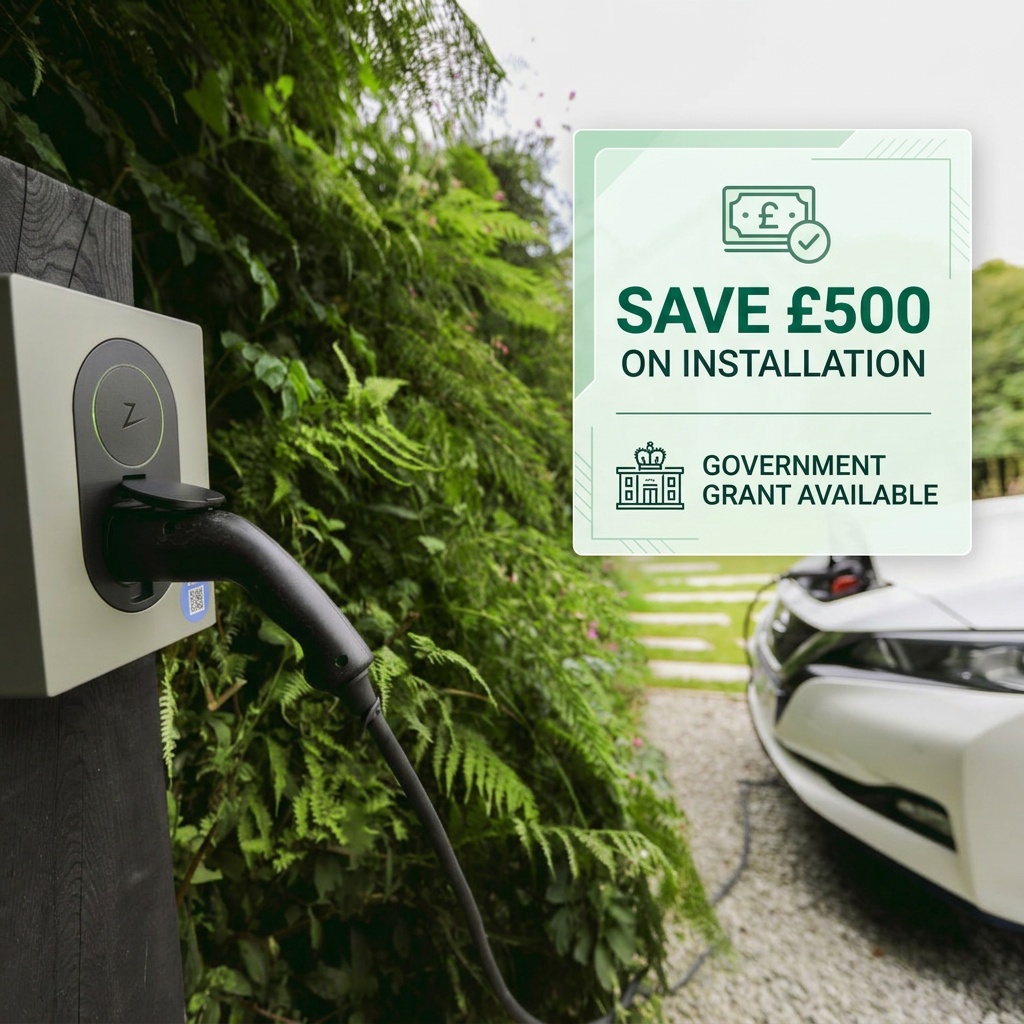
Yes, many holiday let owners can. The Workplace Charging Scheme counts "small accommodation businesses", including holiday and short-stay lets, as eligible. It pays up to 75% of the cost, capped at £500 per socket, and guests are allowed to use the charger. The catch is that this is the scheme's final year: it closes on 31 March 2027, and you have to apply before the charger goes in.
Why this matters now
Most of the EV charger grants that holiday let owners used to rely on have gone. The OZEV grant for commercial landlords closed on 31 March 2026. That leaves the Workplace Charging Scheme (WCS) as the main government grant still open to self-catering owners, and the government has confirmed this is its last year.
The good news is that the grant went up on 1 April 2026, from £350 to £500 per socket. If you're planning a charger before next season, this winter is the time to do it.
What the grant pays
| Workplace Charging Scheme (2026–27) | |
|---|---|
| Grant per socket | Up to £500 |
| Share of costs covered | Up to 75% of purchase and installation (incl. VAT) |
| Maximum sockets | 40 per applicant, across all your sites |
| Voucher validity | 180 days from issue |
| Scheme closes | 31 March 2027, 11:59pm |
| Who can use the charger | Guests, visitors and staff (for small accommodation businesses) |
The grant is paid per socket, not per charger. A twin-socket charger, or two chargers at a property with two spaces, can attract up to £1,000, as long as that is no more than 75% of the total cost.
A worked example
Say a smart, guest-pay charger for a Cornish cottage costs £1,200 fully installed. 75% of that is £900, but the cap is £500 per socket. So for one socket the grant is £500, and your cost drops to £700.
If a guest-pay charger earns you a few pounds' margin per top-up at 35–45p/kWh, and an EV charger helps you pick up extra bookings, that £700 comes back a lot faster than £1,200.
Do you qualify? The four tests
1. You're a "small accommodation business"
The scheme defines this as an accommodation business with 249 or fewer staff. That covers hotels, B&Bs, holiday and other short-stay accommodation, and campsites and holiday parks. A single holiday cottage run by a couple is comfortably inside that.
2. You can prove you're trading
You'll need one of these:
- a Companies House reference number
- a VAT registration number
- a business rates (non-domestic rates) bill from your council
This is where many single-cottage owners get stuck. If you run the let as a sole trader, you're not VAT registered and the property is on council tax rather than business rates, you may not have any of the three.
In England, a holiday let is assessed for business rates if it's available to let for at least 140 days and actually let for at least 70 days in a 12-month period. Most well-run lets in Cornwall and Devon clear that easily, and many pay nothing thanks to small business rate relief, which applies where the rateable value is £15,000 or less. Even with a zero bill, you still get a rates bill, and that bill is your proof. (The rules differ in Wales and Scotland.)
3. You have dedicated off-street parking
The charger must go on off-road parking that belongs to, or is clearly designated to, the property. A private drive or your own bays in a shared car park are fine. On-street parking is not. If you rent the property, you'll need the owner's written consent.
4. You use an approved installer and charger
The installation must be done by an OZEV-authorised installer, using a chargepoint from the OZEV-approved model list. The installer usually claims the grant for you and takes it off your invoice, so you never wait for a refund.
Do I need planning permission as well?
Usually not. A standard wall-mounted charger on off-street parking in England has been permitted development for some time, and the rules were relaxed again in May 2025. You will need to check with the council if:
- the building is listed, or the charger would sit within the grounds of a listed building
- the charger would face onto, and sit within two metres of, a road
- it's a freestanding post over the permitted height
Plenty of Cornish and Devon holiday lets are listed or sit in conservation areas, so ask your installer to check this at survey stage.
How to apply, step by step
- Check your proof of trading. Find your Companies House number, VAT number or latest business rates bill.
- Get a survey and quote from an OZEV-authorised installer, who'll confirm the charger model is on the approved list.
- Apply online through the government's grant portal. Vouchers normally arrive within about five working days.
- Book the installation within the voucher's 180-day window. Don't install before the voucher is issued, or you lose the grant.
- The installer claims the grant and you pay the balance.
Timing tip: the scheme closes at midnight on 31 March 2027 and there is no promised replacement. Applying this autumn or winter means the work is done before Easter bookings start, and you aren't competing with a last-minute rush for installer slots.
What if I don't qualify?
If you're on council tax with no VAT or company registration, the WCS probably isn't open to you. In that case the charger is simply a business cost. A smart, metered charger that bills guests per kWh is still worth it:
- Your electricity costs about 25–28p/kWh on a standard tariff, or as little as 7–9p/kWh overnight on an off-peak EV tariff.
- A fair guest price is 35–45p/kWh, which is still well below public rapid chargers.
- Every session is metered, and guests pay through an app or QR code, so you never subsidise their fuel.
FAQ
Can a holiday let get the Workplace Charging Scheme grant? Yes, if you're a small accommodation business with proof of trading (Companies House number, VAT number or business rates bill) and dedicated off-street parking. Guests can use the charger.
How much is the EV charger grant for holiday lets in 2026? Up to £500 per socket, covering a maximum of 75% of the cost including VAT, for up to 40 sockets per business.
When does the Workplace Charging Scheme end? It closes at 11:59pm on 31 March 2027. The government has said this is its final year.
Is there a minimum number of parking spaces? The current scheme guidance doesn't set a minimum. You need dedicated off-street parking clearly associated with the property, so a single cottage with its own drive can apply.
Can I claim the grant after the charger is installed? No. You must apply and get a voucher first, then install within 180 days using an OZEV-authorised installer.
Want to claim the grant before it closes? Manta Power installs smart, guest-pay chargers for holiday let owners across Cornwall, Devon and the South West. See the holiday let offer, work out your earnings with our calculator, or call 07441 353701.